Signals from Space: How Aussie Hams Are Tapping Satellites to Stay Connected from the Outback
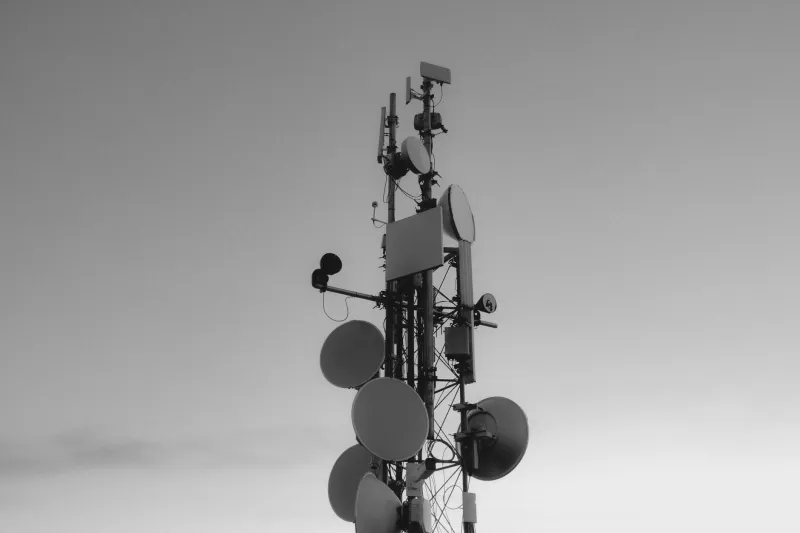
There's a particular kind of frustration familiar to any ham operating west of the Great Dividing Range. You've got your rig sorted, your antenna tuned, and then the ionosphere just... doesn't cooperate. Or the nearest repeater is a three-hour drive away and your VHF handheld is basically a paperweight. For a growing number of Australian amateurs, the answer isn't to look sideways — it's to look straight up.
Satellite-based amateur radio has been around for decades, but the combination of cheaper electronics, better software tools, and a new wave of Low Earth Orbit (LEO) constellations has made it genuinely accessible for remote and regional operators. Whether you're on a remote cattle station in the Kimberley or running emergency comms during a flood event in Far North Queensland, satellites offer something terrestrial networks simply can't: coverage that doesn't care about terrain.
The OSCAR Legacy: Amateur Satellites with Real Heritage
The OSCAR program — Orbiting Satellite Carrying Amateur Radio — has been putting ham payloads into orbit since 1961. Today, there are dozens of operational amateur satellites in various orbits, many coordinated through AMSAT (the Radio Amateur Satellite Corporation). For Australian operators, the most accessible are the LEO birds like AO-91, AO-92, and the SO-50 linear transponder satellite.
Using these satellites isn't as complicated as it sounds. A dual-band handheld with a yagi or even a good rubber duck antenna can make contacts through FM-mode LEO satellites on a clear pass. The catch? Passes are short — typically four to eight minutes — and you need to account for Doppler shift, which means your transmit and receive frequencies need to be adjusted in real time as the satellite moves overhead.
Free tools like Gpredict (Linux/Windows/Mac) and the excellent ISS Detector app on Android handle pass predictions and Doppler correction automatically. At Australia's latitudes, you'll often see multiple usable passes per day on the popular birds, with southern stations sometimes getting better geometry than their northern counterparts depending on the satellite's orbital inclination.
Practical cost for a basic LEO satellite setup: A dual-band handheld (around $80–$250 AUD), a cheap Arrow-style yagi ($100–$200 AUD or homebrew for less), and free software. That's a genuinely low barrier to entry.
Linear Transponders and SSB: Stepping Up the Game
For more serious work — long-distance contacts, digital modes, or reliable data links — linear transponder satellites like AO-7 (yes, launched in 1974 and still partly operational) and the newer Fox-1E allow SSB and CW operation through a passband. This is where things get more interesting for remote Australian operators because a single satellite pass can connect you with other hams across a huge geographic footprint.
The antenna requirements step up here. A circularly polarised yagi or a pair of crossed yagis with a polarity switch gives you much better performance, particularly at low elevation angles common in outback locations where the horizon is flat but atmospheric noise can be an issue. Expect to spend $400–$800 AUD on a proper dual-band satellite antenna setup, or considerably less if you're handy with aluminium tubing.
Some remote Queensland and WA stations have been using linear transponder satellites as a backup communication path during events where HF has been unreliable. The discipline of working within a short pass window actually suits emergency communication scenarios — it forces brevity and good operating practice.
Iridium: Not Strictly Ham, But Worth Knowing
Iridium sits in a different category — it's a commercial constellation, not an amateur one — but it's worth discussing because many remote Australian operators use Iridium satellite phones and data services as a complement to their amateur radio setup. The Iridium network provides genuine global coverage including polar regions, which matters in places like northern Australia where satellite geometry from geostationary birds can be awkward.
For emergency communication planning, pairing an amateur radio station with an Iridium PTT device or satellite phone gives you redundancy. Some WICEN (Wireless Institute Civil Emergency Network) deployments in Australia have used exactly this combination — ham radio for local and regional nets, Iridium for reliable long-haul check-ins when HF wasn't cutting through.
Iridium Go! devices start around $800–$1,200 AUD with prepaid data plans on top. Not cheap, but compared to the cost of being genuinely unreachable during an emergency, many remote operators consider it worthwhile.
The New Constellations: Starlink and What It Means for Hams
Starlink has changed the conversation around remote connectivity in Australia dramatically. While it's not an amateur radio service, it's now being used by remote hams to run Winlink email gateways, remote SDR stations, and even participate in online logging and cluster spotting from places that had essentially no internet before.
The interesting ham application here is remote station operation. With a Starlink terminal at a remote QTH, an operator in Sydney can control a transceiver at their outback property via internet, effectively giving them a high-performance station in a radio-quiet location. This is entirely legal under current ACMA rules provided the licensed operator maintains control.
Starlink hardware runs around $599 AUD upfront with plans starting at roughly $139/month for the residential tier, though regional and roaming plans vary. For a serious remote amateur station, that's increasingly justifiable.
Real-World Case: Station in the Pilbara
One VK6 operator running a remote station about 120km east of Newman has been combining all three approaches. His primary emergency comms path uses HF with a fan dipole. When propagation is poor, he works LEO satellites for short-burst traffic. His Iridium phone is the last-resort check-in method. And since Starlink arrived at his property two years ago, he's been running a remote-operated station that lets him participate in evening nets from his Perth home office.
"The satellite stuff used to feel like a novelty," he told us. "Now it's just part of how I think about comms planning. You layer your options."
That layered thinking is exactly the right approach for any remote Australian amateur. No single path is reliable all the time. But satellites — whether OSCAR birds overhead for a few minutes at a time, Iridium for guaranteed voice, or Starlink for data — have earned a real place in the toolkit.
Getting Started: Practical Steps for Australian Operators
If you're keen to experiment with satellite operation, here's a simple starting path:
- Download Gpredict or ISS Detector and spend a week just watching pass predictions for your location. Get a feel for the geometry.
- Try FM satellites first. AO-91 and SO-50 are good starting points. Your existing dual-band handheld is probably enough for a first attempt.
- Join the AMSAT-NA mailing list and the VK amateur satellite groups on social media. The community is small but very helpful.
- Consider your emergency comms plan. If you're in a remote area, talk to your local WICEN group about how satellite fits into regional emergency communication frameworks.
The sky isn't the limit for Australian hams — it's the starting point.