Made in Australia: The Hams Turning Hobby Projects into Homegrown Radio Products
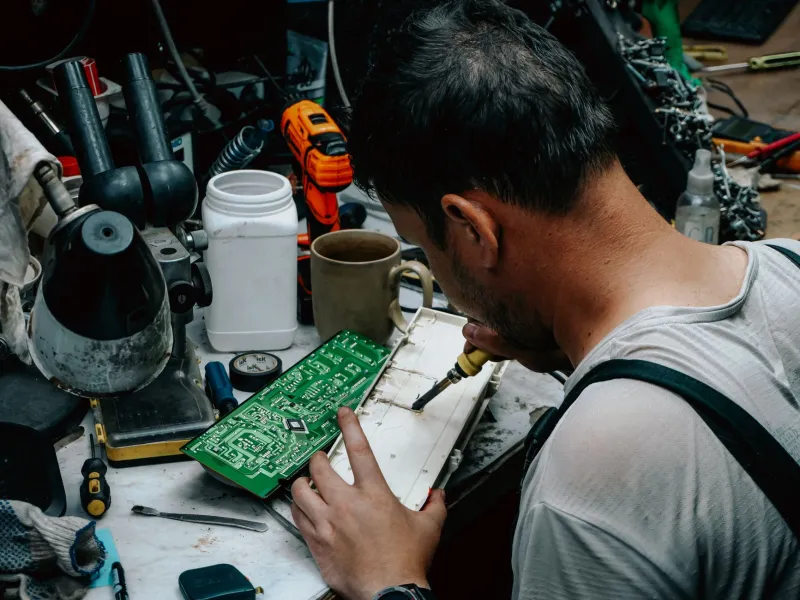
There's a particular kind of satisfaction that comes from making a contact using equipment you built yourself. But a small, determined cohort of Australian amateur radio operators has taken that feeling a step further — they're designing gear that other hams want to buy. From precision antenna components to software-defined radio tools tailored specifically for Australian operating conditions, a cottage industry is quietly emerging from sheds and spare bedrooms across the country.
This isn't about ego or side-hustle economics (though neither is entirely absent). It's about solving problems that offshore manufacturers haven't bothered to address, and doing it with an understanding of what Australian conditions actually demand.
Why Local Design Matters Down Here
Australia presents some genuinely unique challenges that generic imported equipment doesn't always handle well.
The climate is an obvious one. In the north, equipment faces humidity and heat that accelerates corrosion on PCB traces, connector contacts, and antenna hardware. In the inland, extreme UV exposure and temperature swings that can exceed 50°C in a single day play havoc with plastic enclosures and cable insulation. A filter housing designed for a temperate European environment may be mechanically fine in Hamburg and completely useless on a rooftop in Townsville.
Frequency allocations are another factor. Australia's amateur bands have some differences from the US and European allocations — the 60-metre situation, various secondary allocations, and the specific channelling used on VHF/UHF repeater networks all mean that some overseas products need modification or simply don't fit neatly into Australian operating practice.
Then there's the tyranny of distance. If you're ordering a replacement part or a specialised component from the US or Europe, you're looking at two to four weeks shipping, potentially import duties, and the ever-present risk that the item arrives damaged. Local supply chains, even small ones, are genuinely valuable.
The Filter Builders
One of the most active areas of local design is in filtering — both for transmit and receive applications. The proliferation of SDR receivers has created strong demand for high-quality bandpass filters, low-pass filters, and notch filters that can protect sensitive front ends from broadcast interference or the ham's own transmitter.
Several Australian operators have moved from winding their own toroids for personal use to producing small batches for sale through club networks and online communities. The designs are typically shared openly — many are derivatives of well-known published circuits — but the value-add is in quality construction, appropriate component selection for local conditions, and the fact that you can actually buy one without waiting a month.
One Melbourne-based experimenter who asked not to be named (he's still working through the ACMA compliance side of things) has been producing a range of HF bandpass filter sets for SDR use, wound on powdered iron cores sourced from a Brisbane electronics supplier. His waiting list currently runs to several weeks.
Antenna Components: The Gap in the Market
Antennas are another fertile ground for local design. Australia's vast distances mean that antennas optimised for NVIS propagation — used extensively for regional emergency communications — are in genuine demand. So are lightweight, packable designs suited to portable and SOTA (Summits on the Air) operation in Australian conditions.
A number of small operators have identified that quality antenna wire, appropriate for the UV exposure levels in Australia, is genuinely hard to source locally in small quantities at reasonable prices. Several have moved into small-scale distribution of UV-resistant antenna wire, often accompanied by design guides and cut-length kits for specific popular antenna configurations.
Enclosures for antenna control boxes, remote switching units, and weatherproof connector housings represent another gap. 3D printing has opened this space considerably — a ham with a decent FDM printer and some design skills can produce enclosures in UV-stabilised PETG or ASA that are genuinely suited to outdoor Australian use, and several are doing exactly that on a small commercial basis.
Navigating ACMA: The Regulatory Reality
Here's where things get complicated, and where many would-be local manufacturers hit a wall.
If you're selling a passive device — a filter, an antenna component, a purely mechanical enclosure — the regulatory burden is relatively light. These aren't transmitting devices, and while general consumer product safety obligations still apply, you're not dealing with spectrum licensing.
The moment you start selling anything that transmits — even a low-power beacon, a repeater controller, or a device with an oscillator — you're entering territory that requires compliance with the Australian Communications and Media Authority's radiocommunications equipment standards. The relevant instrument is typically the Radiocommunications (Low Interference Potential Devices) Class Licence for very low power devices, but anything with meaningful transmit power needs formal compliance testing and supplier authorisation.
For most small-scale Australian designers, this means one of two approaches: keep the products passive, or design for use with licensed amateur radio equipment in ways that put the compliance responsibility on the transceiver rather than the accessory. It's a constraint, but it's a workable one for many product ideas.
Several operators have found that selling as a kit — components and boards rather than assembled, tested product — reduces some regulatory complexity, though it doesn't eliminate all obligations.
Software: The Lowest Friction Path
Software tools present fewer regulatory hurdles and have seen some genuinely impressive local development. Australian hams have contributed to open-source SDR software, developed propagation prediction tools tuned to Southern Hemisphere ionospheric models, and built logging software with features specific to Australian award programs like the John Moyle Field Day and VK Shires.
The barrier to entry is low, the distribution is global, and the feedback loop from the amateur radio community is fast. For technically capable hams who are more comfortable with a keyboard than a soldering iron, software is often the most accessible path from tinkerer to contributor.
What This Community Needs
The Australian amateur radio equipment design community is real, it's growing, and it's producing genuinely useful stuff. But it operates largely through informal networks — club mailing lists, Facebook groups, the occasional forum post on amateur radio communities.
What would help it grow? A few things come to mind: better-organised platforms for discovering and purchasing locally designed equipment, more structured knowledge sharing around the ACMA compliance process for small manufacturers, and frankly, more hams willing to pay a fair price for locally designed and built equipment rather than defaulting to the cheapest import.
If you've got a design that solves a real problem, there's a market for it. And there's a community here that genuinely wants to see it succeed.