Backyard Radio: Setting Up Your First Home Ham Station Without Emptying Your Wallet
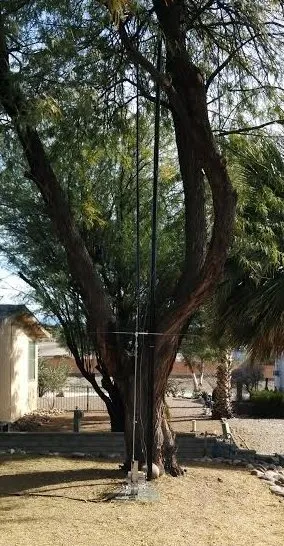
Photo: Gary Leo AF7M, CC BY-SA 4.0, via Wikimedia Commons
So you've passed your Foundation or Standard licence exam, you've got your callsign, and now you're staring at a spare corner of the garage wondering where to even start. Welcome to one of the most satisfying — and occasionally frustrating — parts of the hobby: building your shack.
The good news is that a functional, enjoyable home station doesn't require a tower in the backyard or a rack full of expensive gear. The bad news? There are a few uniquely Australian challenges that the overseas YouTube tutorials and US-based forums won't tell you about. Let's sort through them.
Picking Your Space: Shed, Spare Room, or Something Weirder
The "shack" can be almost anything — a dedicated spare room, a corner of the home office, or the classic Australian backyard shed. Each option comes with trade-offs.
A spare room is convenient for climate control and keeping the XYL happy, but running antenna cables through walls can be a headache, and you'll need to think carefully about RF getting into household electronics. A backyard shed gives you more freedom with antennas and separates your radio noise from the rest of the house, but in coastal Queensland or northern WA, heat and humidity will absolutely destroy equipment if you don't manage it properly. Even in temperate areas like Sydney or Melbourne, a tin shed in summer can hit temperatures that'll cook your radio's finals.
If you're going the shed route, consider a small split-system air conditioner or at minimum a quality ventilation fan. A dehumidifier in humid coastal areas is worth its weight in gold. These aren't luxuries — they're long-term equipment protection.
Antenna Placement: Working With What You've Got
This is where most new Aussie hams hit their first wall. Many of us live in suburban blocks with body corporate restrictions, close neighbours, and not a lot of vertical space. The good news is that antennas don't need to be massive or obvious to work well.
For HF, a simple end-fed half-wave (EFHW) wire antenna strung between the house and a fence post, or up into a backyard tree, can perform remarkably well. These antennas are cheap to build — the wire itself costs almost nothing from Jaycar or your local electrical supplier, and a basic 49:1 UNUN transformer can be wound for under $20 in parts. There are plenty of build guides online, and the results genuinely rival commercial options costing hundreds of dollars.
For VHF and UHF, a Diamond X50 or similar dual-band vertical mounted on a chimney bracket or fence post gets you on the local repeater network with minimal fuss. Mount it as high as you can manage — every metre of extra height counts.
One thing worth knowing: in Australia, the ACMA doesn't regulate antenna structures under 5 metres above your roofline for residential amateur use, but your local council and body corporate rules might. Check before you bolt anything up. Some councils in denser areas like inner-city Melbourne or Sydney's northern suburbs can be particularly fussy. A quick call to the council planning desk is much less painful than a complaint from a neighbour.
Taming the Noise: Suburban RFI Is Real
If you've ever fired up an HF radio in a modern suburban house and wondered why the noise floor sounds like a swarm of angry bees, you've met the enemy: RFI. Switching power supplies, LED lighting, solar inverters, NBN equipment, and even cheap phone chargers all pump noise into the HF spectrum. In Australia's newer suburbs, where every house has a rooftop solar system and a smart TV, this problem is genuinely worse than it was a decade ago.
The single most effective thing you can do is get your antenna as far from the house as possible. Even 10–15 metres of separation makes a real difference. If that's not an option, ferrite chokes on your feedline (a few snap-on ferrite cores from Jaycar will do the job) can knock down common-mode noise significantly.
Indoors, identifying the worst offenders with a portable AM radio or an SDR dongle and walking around the house is a surprisingly effective technique. Cheap LED downlights are notorious culprits — replacing them with quality branded units (look for ones that meet Australian EMC standards) often makes a noticeable difference.
The Gear Itself: Where to Spend and Where to Save
For a first HF transceiver, the Yaesu FT-891 and the Icom IC-7300 remain the most recommended options in Australian amateur circles, and for good reason — they're reliable, well-supported locally, and hold their resale value. The IC-7300 in particular has a built-in panadapter display that makes it much easier to find activity on a band, which is genuinely useful when you're still learning.
That said, if budget is tight, the secondhand market in Australia is excellent. Check the WIA classifieds, the various VK amateur radio Facebook groups, and local club notice boards. A used IC-7300 or FT-450D in good condition will serve you just as well as a new one, and you'll save several hundred dollars that can go toward a better antenna or a decent power supply.
On the power supply front, don't cheap out. A quality 30-amp linear or regulated switching supply (Powertech from Jaycar is a reasonable budget option; Samlex or MFJ if you want something more robust) will save you grief. Noisy power supplies are another common source of interference.
Weatherproofing and the Long Game
Australia is hard on outdoor equipment. UV radiation here is brutal — coaxial cable jackets that would last 15 years in the UK can crack and fail in five years in Queensland. Use UV-rated cable outdoors, or protect it with conduit. Self-amalgamating tape on all outdoor connectors is non-negotiable; standard PVC tape turns to sticky goo in the heat.
Connectors are another place to spend a little more. Quality PL-259s and SO-239 sockets with proper sealing will outlast cheap ones by years. If you're soldering your own coax connectors, take your time and do it right — a poorly soldered connector is a common cause of mysterious performance problems.
Getting On Air and Finding Your Community
Once you're set up, the best thing you can do is get active. Check into a local net, make some contacts, and don't be afraid to ask questions. The VK amateur community is genuinely welcoming to newcomers, and most experienced operators are happy to help troubleshoot a noisy antenna or a confusing piece of gear.
Your local radio club is also worth joining early — many run regular working bees, antenna construction days, and have members with equipment you can borrow or buy secondhand at fair prices. The practical knowledge you'll pick up in person is worth more than any amount of forum browsing.
Building a shack is an ongoing project, not a one-time event. Start simple, get on air, and improve things as you go. That's how most of the best stations in VK got built — one upgrade at a time.