When It Really Matters: Australian Amateur Radio Emergency Groups Worth Joining
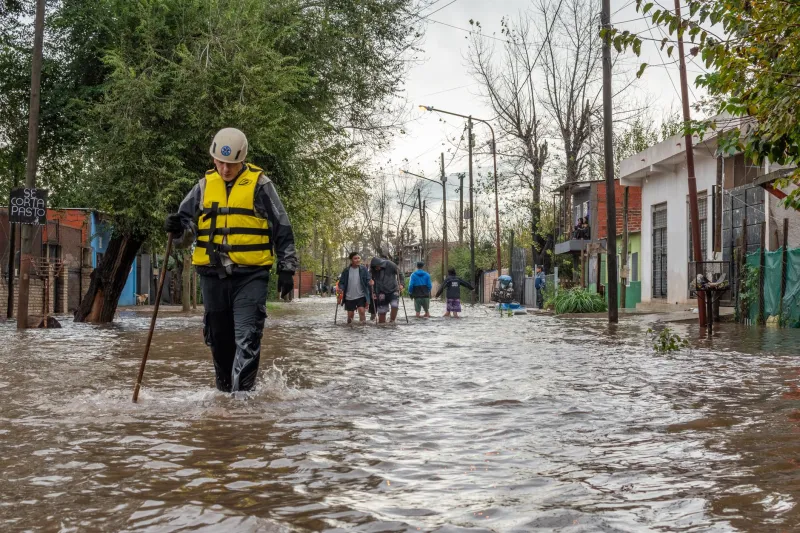
Every bushfire season, every major flood, every cyclone that crosses the Queensland coast — somewhere in the background, amateur radio operators are quietly doing what they've always done. They're keeping communications alive when mobile towers are down, roads are cut, and satellite phones are flat. But not every group with "emergency" in its name is actually ready to deploy when things get serious.
This guide is for hams who want to genuinely contribute — not just hold a licence and a sense of self-importance. Here's who's doing the real work, what they need, and how you can slot in usefully.
WICEN: The Volunteer Comms Backbone
Wireless Institute Civil Emergency Network — WICEN — is probably the best-known amateur radio emergency organisation in Australia, and for good reason. Operating under the umbrella of the Wireless Institute of Australia (WIA), WICEN groups are active in most states and have formal relationships with emergency management agencies.
WICEN's scope is broader than pure disaster response. They provide communications support for major public events — think ultramarathons, endurance cycling events, and outback races — which serves the dual purpose of funding the organisation and keeping skills sharp. When a real emergency hits, those event-hardened operators know how to run a net, manage traffic, and keep cool under pressure.
To join, contact your state's WICEN coordinator through the WIA website. Most groups require at minimum a Foundation licence, though an Advanced licence opens more operational roles. Expect to complete some basic training and attend exercises before you're considered deployable.
Recent activation: WICEN NSW deployed during the 2022 Northern Rivers floods, providing communications support in areas where mobile infrastructure was completely knocked out for days. Operators worked from temporary stations in evacuation centres and coordinated with NSW SES.
ARES and AREC: The International Model, Australian Style
Amateur Radio Emergency Service (ARES) is an American concept that's been adapted by various Australian groups, sometimes under the name Amateur Radio Emergency Communications (AREC). The structure varies significantly by state and club, so quality and activity levels vary too.
At their best, ARES/AREC groups maintain trained rosters, run regular nets, and have pre-arranged relationships with local emergency services. At their worst, they're a paper organisation that shows up enthusiastically to planning meetings but struggles to put operators in the field.
The honest advice? Before committing to any AREC group, ask some pointed questions: When did you last activate for a real emergency? What does your training program look like? Do you have a formal MOU with any emergency management agency? The answers will tell you a lot.
State-Specific Groups Worth Knowing
Queensland: QRAA (Queensland Remote Area Amateur) focuses heavily on supporting remote communities and works closely with RACQ CareFlight and other regional services. If you're in rural Queensland, these are your people.
Victoria: The Victorian AREC groups have been notably active in recent years, particularly following the 2019-20 bushfire season. Several Victorian clubs have invested heavily in go-kit equipment and portable repeater infrastructure.
Western Australia: Given the state's sheer size and the communication challenges of the Pilbara and Kimberley regions, WA has some of the most technically capable emergency communications operators in the country. The RASON (Radio Amateurs Society of NSW — sorry, WA) community is worth contacting directly.
South Australia: SARC (South Australian Radio Communications) maintains emergency communications capability with a focus on HF for regional reach, which makes sense given SA's geography.
What Actually Makes You Useful
Here's the honest truth that not everyone in the hobby wants to hear: showing up to an emergency activation with a handheld radio and enthusiasm is not automatically helpful. In a busy, high-stress net environment, an operator who doesn't know proper net discipline can actively make things worse.
The skills and equipment that genuinely matter:
Net discipline: Can you pass traffic clearly, concisely, and without unnecessary chatter? Can you copy messages accurately under poor conditions? These are practised skills, not natural talents.
HF capability: VHF/UHF handhelds are useful locally, but for reaching isolated properties or coordinating across a region, HF matters enormously. An operator with a portable HF station and the skills to deploy it quickly is genuinely valuable.
Portable power: A station that needs mains power is a liability in a disaster. If your go-kit isn't battery and solar capable, it's not really a go-kit.
Digital modes: Winlink email over HF has become a critical tool for passing formal traffic when voice nets are saturated. Learning to run a Winlink station, including on Vara HF, is time well spent.
Logging and traffic handling: The ability to accurately log messages, maintain a net log, and pass formal written traffic using standard formats (the ICS-213 form is widely used in Australia) is a skill that's undervalued until it's desperately needed.
Training Resources
The WIA offers online training through its education program. ARRL materials (freely available and widely used despite being American) cover emergency communications concepts that translate directly to Australian operations. Many state groups run NVIS (Near Vertical Incidence Skywave) exercises specifically because it's the propagation mode most useful for regional emergency communications in Australia.
Look for your local club's involvement in the annual VKFF (VK Flora and Fauna) activations and similar portable operating events — these build exactly the skills you need for emergency deployment.
Joining Up: The Practical Steps
- Get your licence if you haven't already (Foundation is enough to start)
- Join your local club — most emergency groups work through clubs
- Contact your state's WICEN coordinator or AREC group
- Attend training and exercises before an emergency happens
- Build a go-kit that's genuinely field-deployable
- Practice net operations on your club's regular nets
The operators who are genuinely useful during disasters didn't become useful overnight. They put in the work during the quiet times. If you start now, you'll be ready when it counts.