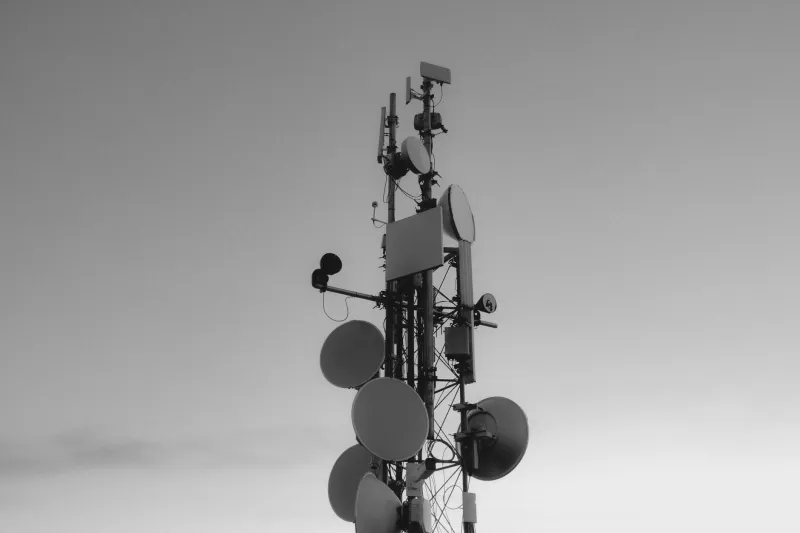
Mains Noise Mayhem: Identifying and Fighting Power Line Interference on HF
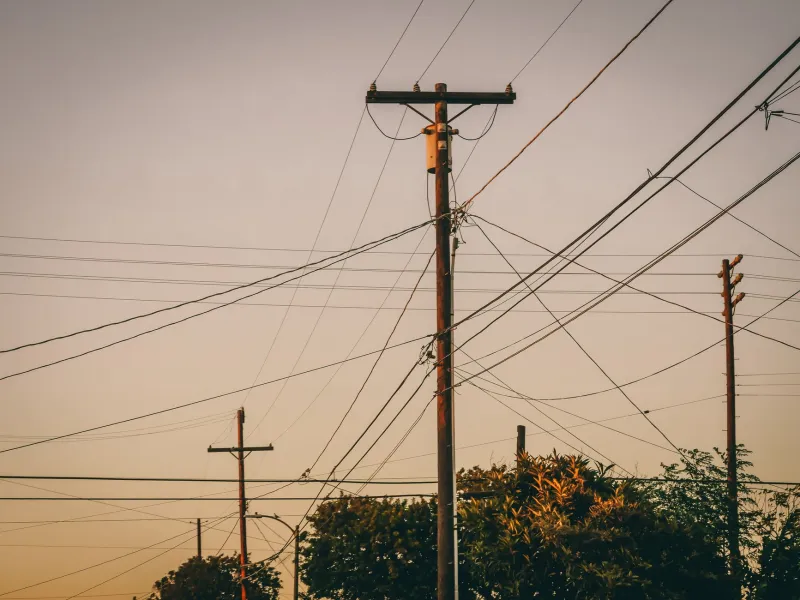
You've just set up a decent antenna, your rig is tuned, and you're ready to work some DX — then you hear it. That persistent, buzzing, buzz-saw drone sitting right across the 40 metre band like an uninvited house guest who won't leave. Welcome to the world of power line harmonics, one of the most frustrating and least-discussed problems facing Australian hams today.
Whether you're in a leafy inner suburb of Sydney or on a rural property outside Dubbo, Australia's ageing electrical infrastructure is quietly wrecking HF signals for thousands of radio operators. The good news? You're not powerless. (Pun intended.)
What's Actually Making That Noise?
Australia's power grid runs at 50 Hz. Harmonics of that fundamental frequency — 100 Hz, 150 Hz, 200 Hz and so on — can be generated by a surprising range of equipment and infrastructure faults. The most common culprits include:
- Failing or corroded insulators on overhead distribution lines
- Loose hardware causing arcing between conductors or between conductor and earth
- Solar inverters (yes, your neighbour's rooftop system could be the villain)
- Switch-mode power supplies in everything from LED drivers to EV chargers
- Failing streetlight ballasts, particularly older sodium vapour types
In rural areas, long spans of unshielded overhead powerlines act almost like antennas themselves, radiating noise across huge distances. The ACMA has acknowledged this is a growing problem, particularly as aging infrastructure intersects with the proliferation of consumer electronics that generate switching noise.
The characteristic sound varies: power line arcing tends to produce a harsh, buzzing tone that changes with weather conditions (worse on humid or foggy mornings), while switching power supplies often produce a more regular, almost musical harmonic series.
Measuring the Problem on a Budget
Before you can complain about interference — or fix it — you need to characterise it. Here's where affordable software-defined radio (SDR) equipment earns its keep.
A basic RTL-SDR dongle (available for under $50 AUD from local electronics suppliers or online) combined with free software like SDR# or GQRX can reveal the harmonic structure of your noise floor in vivid detail. Sweep across the HF bands and look for regularly spaced spikes at 50 Hz intervals. If they're there, you're dealing with mains-related interference.
For a more precise direction-finding approach, try a small shielded loop antenna connected to your SDR or a portable receiver. Walk around your property and nearby streets with the loop oriented broadside to null out the signal. Where the null sharpens, you're getting closer to the source. It's low-tech, but it works.
Keep a log of your measurements: time of day, weather conditions, frequency and approximate signal strength. Screenshots from SDR software with timestamps are gold. You'll need this documentation later.
Documenting for ACMA — Do It Right
Lodging an interference complaint with ACMA isn't something you do on a whim, but it's absolutely worth doing if you've identified a genuine external noise source. The regulator does investigate, particularly when the interference is clearly coming from electrical infrastructure rather than domestic consumer electronics.
Your complaint will be taken more seriously if you can provide:
- Audio recordings of the interference (most SDR software can export these)
- Waterfall screenshots showing the harmonic signature
- A log of observations over several days, noting conditions
- A rough location estimate of the noise source based on your portable measurements
- Your licence details — complaints from licensed amateurs carry more weight than those from unlicensed users
AMCA's online interference reporting portal is the right starting point. If the interference appears to come from Ausgrid, Endeavour Energy, Essential Energy or another distribution network operator, ACMA can coordinate with them directly. The process is slow — expect weeks, not days — but persistent, well-documented complaints do get results.
Practical Mitigation While You Wait
If you're not prepared to wait months for infrastructure repairs, there are things you can do right now to improve your situation without relocating your shack.
Common-mode choke on your feedline: A well-wound choke using a suitable ferrite core (Fair-Rite type 31 material is widely recommended for HF) placed at the feedpoint and again at the shack entry can dramatically reduce noise entering via your coax shield. This is particularly effective against noise that's coupling onto the feedline rather than arriving via the antenna itself.
Antenna orientation: Directional antennas like a Yagi or a phased vertical array let you null the noise source. Even a simple dipole can be rotated to place the noise source off the ends, where a dipole has its deepest nulls.
Band and time selection: Power line noise often changes character after midnight when load drops. If 40 metres is unusable during the day, try 80 metres at night — the skip characteristics shift anyway, and the noise floor often drops significantly.
DSP noise reduction: Modern transceivers and SDR software both offer digital noise reduction. It won't eliminate broadband noise, but it can make a marginal signal workable. The Icom IC-7300's NR function, for example, is genuinely useful for this application.
The Bigger Picture
Power line interference isn't going away on its own. As Australia continues rolling out smart meters, rooftop solar and EV charging infrastructure, the sources of mains-related HF noise are multiplying faster than they're being addressed. The amateur radio community has a role to play here — not just as complainants, but as a technically capable group that can characterise and document interference in ways that ordinary consumers simply can't.
If your local club isn't already running interference-hunting activities or liaising with local network operators, it's worth raising the topic. A coordinated approach, with multiple hams providing independent measurements, is far more compelling to a regulator than a single complaint.
Your HF signal deserves better than a 50 Hz buzz. With the right tools and a bit of persistence, you can fight back.